Svitlana Yhermina, a participant in Vikes’ mentoring programme, wrote an article for the Czech media outlet Econews about Onkalo, Finland’s solution for the final disposal of spent nuclear fuel. The article is an example of cross-border journalism, bringing local issues and perspectives to new audiences across national borders.
A narrow strip of asphalt winds through farmers' fields, where the bright blue sky meets the treetops on the horizon. A yellow wooden school building stands by the roadside, and neat private houses are scattered here and there on both sides of the way. This is Eurajoki — a cozy coastal town in western Finland near the Gulf of Bothnia, home to barely 9000 people.
It is hard to imagine that just ten kilometers from this pastoral idyll, one of the most ambitious and complex engineering projects of our time is unfolding. Here, deep underground, preparations are wrapping up for the opening of Onkalo — the world's first repository for the final disposal of spent nuclear fuel.
Currently, Posiva Oy, the company responsible for the project, is awaiting its final operating license from the Finnish government. Pending approval, the first batches of radioactive waste could be lowered underground by the end of the year. Posiva itself says that its goal is to get the readiness before the end of the year 2026. Finland would then become the first country to begin permanent disposal of spent nuclear fuel.
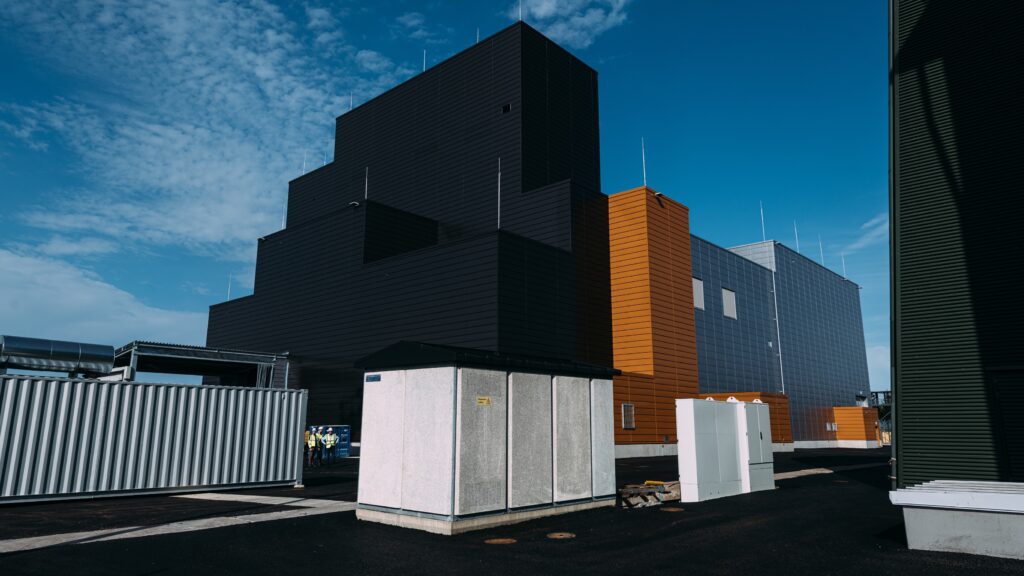
Project Concept for
The Onkalo project (which translates from Finnish as "cave" or "hollow") has been under development since the 1980s as a long-term solution for the safe disposal of spent nuclear fuel. Research culminated in the creation of an underground complex built into solid granite bedrock at a depth of about 450 meters.
The repository is located on Olkiluoto Island, right next to the nuclear power plant of the same name. The facility will accept radioactive waste from both of the country's operating NPPs — Olkiluoto and Loviisa (located in southern Finland).
"This project is incredibly complex technologically and absolutely unprecedented," says Tuomas Pere, geologist at Posiva, during a tour of the underground complex. "It took us over 30 years just for approvals and research."
The construction of the first phase lasted over 10 years. In May 2026, the project entered its final stages: the above-ground encapsulation plant was fully tested and the first five underground disposal tunnels were completed. The following stages, which involve constructing more than 100 tunnels, will be carried out gradually while the repository remains operational.
The construction of the first phase has costed around one billion euros. Posiva estimates the total life-cycle budget of Onkalo at approximately 5–5.5 billion euros.
The project is funded by Posiva’s owners, TVO and Fortum. They can borrow money from Finland’s State Nuclear Waste Management Fund, which is financed by contributions from the same energy companies that operate the nuclear power plants.
However, Onkalo is not a commercial business. Finnish law prohibits the export and import of spent nuclear fuel, so the complex was built exclusively for the country's domestic needs.
"This is rather our responsibility," comments Philippe Bordarier, CEO of TVO, which operates the Olkiluoto NPP.
Posiva notes that it can earn money by selling its own technologies and is already collaborating with more than 20 companies worldwide.
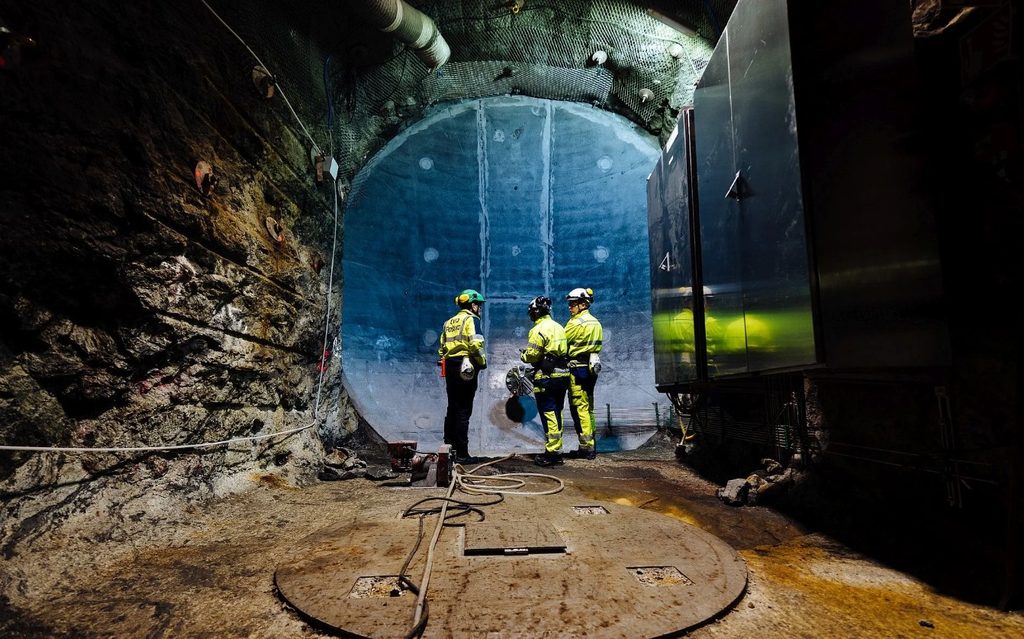
How the Repository Will Work
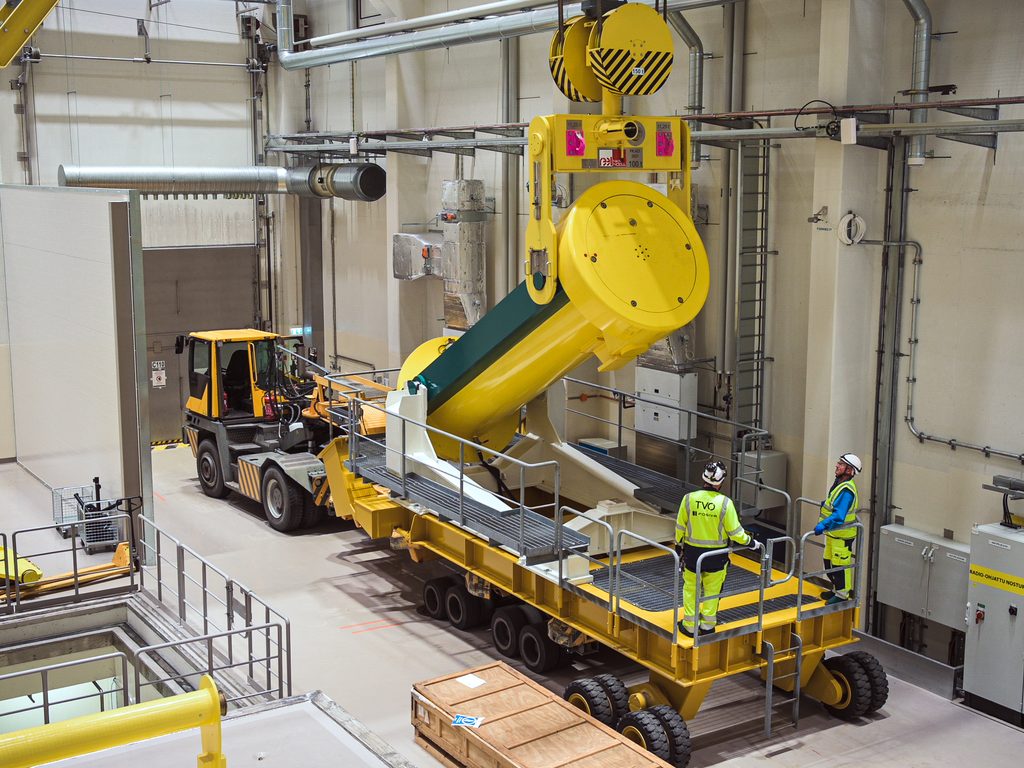
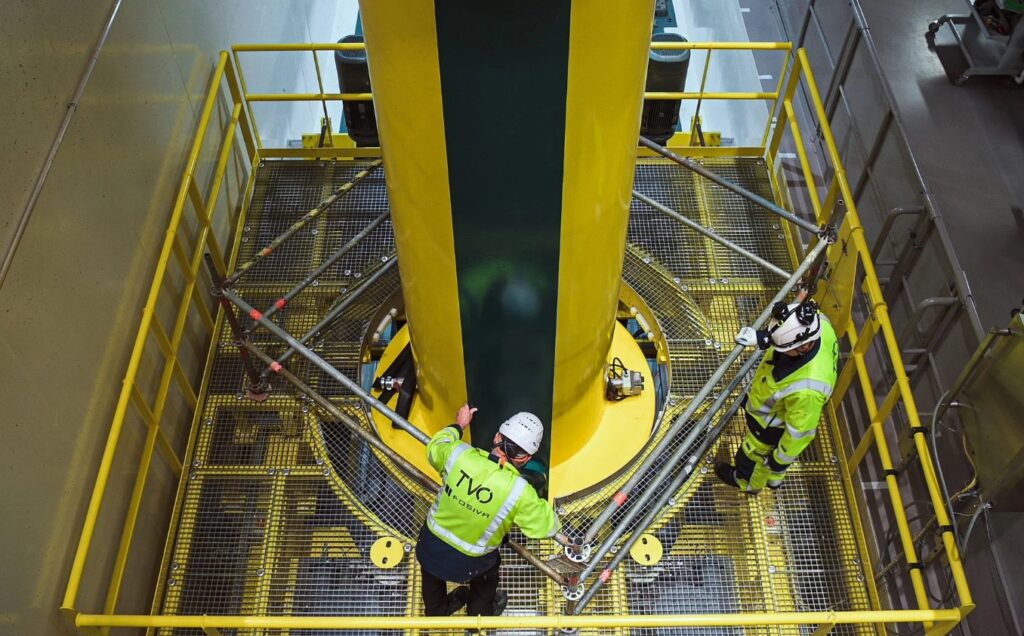
Cooled spent nuclear fuel will be transported from nuclear power plant storage facilities to Onkalo in special transport containers. The fuel assemblies will remain submerged in water inside sealed steel transport containers during loading and transport. The technology provides that it will be received by an above-ground complex where automated equipment will transfer the fuel elements into thick-walled copper canisters. After this, the finished structure will be slowly lowered underground to a depth of nearly 430 meters, where specialized loaders will distribute the canisters to the disposal tunnels.
The length of each such tunnel is about 350 meters. Vertical, nine-meter-deep shafts are drilled into their floors, into which the spent fuel canisters are lowered.
Posiva’s experts say that these underground galleries will be located at a safe distance from one another: depending on the type of fuel, between 30 and 40 canisters can be placed in a single tunnel. Such repositories are built within monolithic granite bedrock.
According to Posiva, choosing locations free of tectonic faults is intended to ensure that groundwater will not seep into the waste and that the repository itself will withstand the pressures of future ice ages and crustal movements. Bentonite blocks—a special type of clay used to line each shaft—serve as an additional engineered barrier. Upon contact with underground moisture, this material swells and becomes fully monolithic, creating a hermetic seal that prevents further water movement toward the nuclear fuel canisters.
"Once a tunnel is filled, the access tunnel will be backfilled with a bentonite-crushed-bedrock mixture, and the exits are sealed with massive concrete plugs," explains Tuomas Pere.
The Onkalo repository will accept spent nuclear fuel for the next 100 years — exactly as long as Finnish NPPs remain operational. When the final canister is lowered into it, the complex will be completely sealed and left in place. According to Posiva's calculations, the waste will remain completely safe in this state for at least 100,000 years. Over time, the fuel’s radioactivity is expected to decline to levels comparable to naturally occurring uranium.
Accident Modeling
Representatives of Posiva note that the repository site was chosen meticulously after analyzing over 100 options. The main criteria were low population density, proximity to active nuclear power plants (NPPs), and rock stability. The granite beneath the Eurajoki municipality is considered one of the oldest and most stable on the planet, dating to nearly 1.8 billion years ago.
The biggest challenge during the design phase was groundwater. At one time, a similar Swedish project in Forsmark faced legal delays due to scientists' concerns that moisture could damage the copper canisters.
Posiva’s Communications Manager, Pasi Tuohimaa, says the company has taken this risk into account by implementing a multilayered protection system.
In addition, the tunnels were constructed with a slight incline so that any groundwater seeping inside would drain away from the disposal shafts into dedicated collection reservoirs, from which the water would be pumped to the surface for monitoring.
To test the system in the event of emergencies, the company modeled various scenarios and published the results on its website.
Specifically, they analyzed the probability of an earthquake beneath the repository, canister corrosion, and pressure from ice ages. The calculations suggested that the protective capsules would withstand the load under such circumstances. Experts even calculated a worst-case scenario in which all possible risks occur at once: a defective canister, bentonite washout, and an earthquake lead to a cracked capsule, causing fuel to begin washing out to the surface via groundwater.
The results showed that even with this combination of factors, the granite's natural density would block the spread of radiation. Computer modeling of the worst-case leak scenario showed that the annual radiation dose on the surface would not exceed 0.0001 mSv. This is less than the dose a passenger receives during a single intercontinental flight.
The Finnish Secret of Trust The Onkalo project received support among the local population in Eurajoki.
In 2000, the municipal council approved the repository's location by a vote of 20 to 7. Under Finnish legislation, the local community effectively held veto power, meaning Parliament could not approve the project without its consent.
This support stems from the fact that a significant number of Eurajoki residents worked at the Olkiluoto NPP and were already familiar with the operating principles of nuclear facilities. Additional factors included a high level of public trust in government decisions and the priority of environmental values in society.
Posiva emphasizes that openness and public communication also contributed significantly to this outcome. During the planning stage, the company held numerous consultations with the public and independent experts, which was also a legal requirement.
"We are completely open to communication. Perhaps we are the most open of the 'closed' projects in the world," says Pasi Tuohimaa.
Today, Onkalo regularly draws scientists, politicians, journalists, and tourists from all over the world. According to Posiva, the facility's information center welcomes about 20,000 visitors each year.
A Strategic Choice
In recent years, the strategic importance of nuclear energy for Finland has only grown — especially against the backdrop of European energy crises and the war in Ukraine. Parliamentary discussions increasingly emphasize the role of nuclear power plants as a reliable source of stable and independent electricity.
Today, about 40% of the country's electricity is generated by nuclear power plants. Public opinion polls show that public trust in nuclear energy in Finland has been, and remains, among the highest in the EU.
"We Finns are very practical people," comments Pasi Tuohimaa. "We are well aware of all the risks of energy dependence, which is why we support complex but reliable solutions that provide us with stability."
Text: Svitlana Yeharmina
Photo: Posiva Oy
Orginal article published in www.ecoconews.fi 11.9.2026