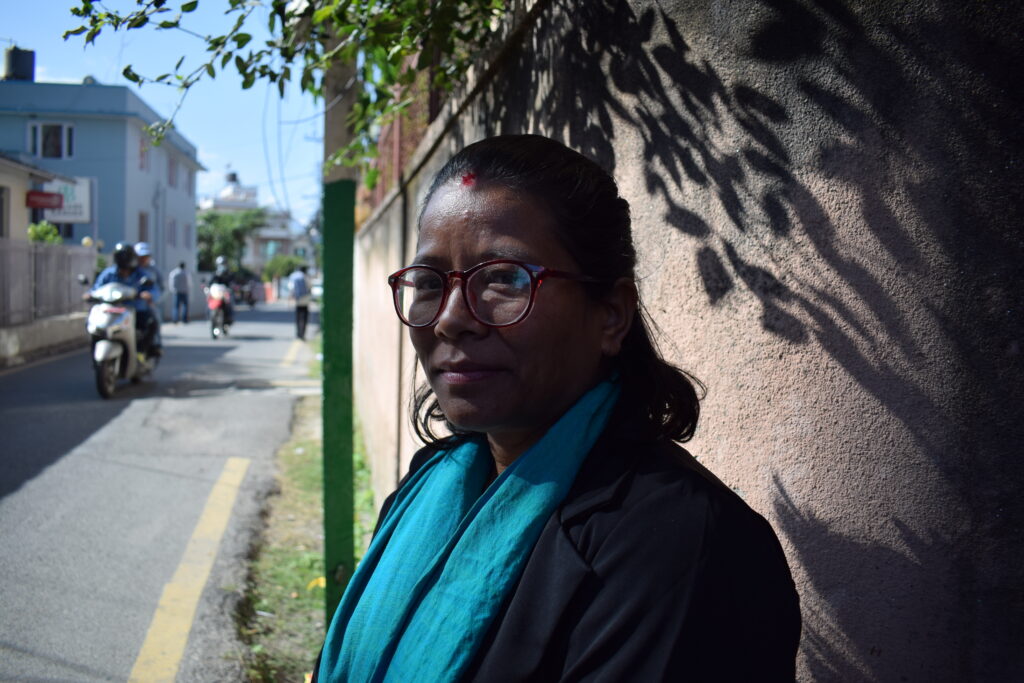
A blurry image of a smiling woman sits atop a glass-door bookshelf. Bimala Tumkhewa lifts the picture down and dusts the glass.
The woman in the picture is Uma Singh. She is a journalist who was murdered in her home in 2009. Singh had been reporting on protests against the government by the marginalized Madhes movement in Terai. She was also known for her articles on the status of women.
“We consider her a martyr,” says Tumkhewa.
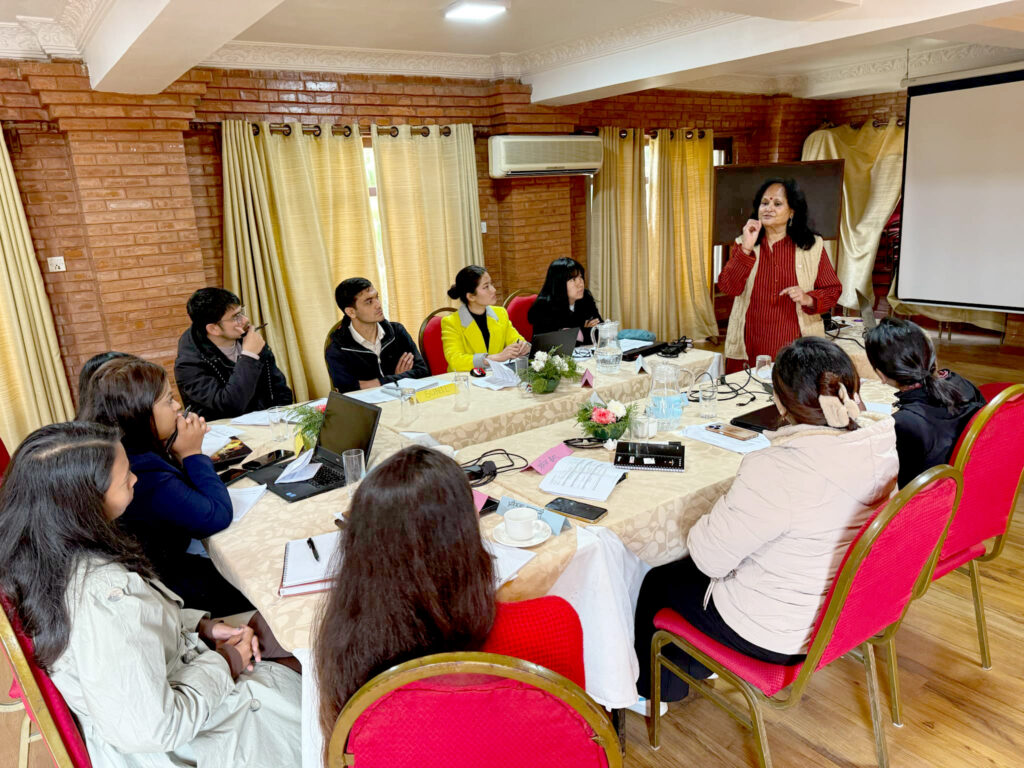
Tumkhewa is the chairperson of Sancharika Samuha, an organization for female journalists in Nepal.
The organization has been active in the country since 1996. It aims to promote the position of female journalists in the working life. It also aims to make equality issues more prominent in the country's media.
Nepali female journalists have always been at the forefront of fighting for social change," says Tumkhewa.
Like Singh, they have addressed grievances, demonstrated and raised human rights issues. They have played an important role in Nepal's democratisation process.
That's why the fact that they have the opportunity to work is so important.
Patriarchal structures and insecurity push women out of the media industry
Only one in four journalists in Nepal is a woman. Fewer women enter the industry than men, and more women leave. Women are being “pushed out” of journalism, as Tumkhewa puts it.
She says that patriarchy is behind it all, and patriarchy influences the structures and culture of society.
A study published by Sancharika Samuha in 2016 found that managers of many media houses view women as comfort-seeking and unambitious employees.
They were also seen as weak because they do not want to work late at night. In reality, walking home at night can be dangerous for women.
But women are not safe at work either: they experience sexual harassment both in the office and at work gigs. Women, especially those writing about sensitive issues such as politics, human rights and social justice, also face harassment online, where they are threatened and yelled at.
Many Nepali journalists are paid less than the minimum wage for their work. Men are also paid little, but women are paid even less. There is a lot of insecurity in the sector, which affects women in particular.
”Many highly qualified female journalists move on to work for international organizations as communications specialists”, says Tumkhewa.
She also recalls the case of a skilled female journalist who moved to work in local government as a result of economic uncertainty.
“She went over to the other side, from being a watchdog of power to a government official.”
Advocacy efforts must also target men
If there were more female journalists, there would probably be more and better writing about issues that affect them, Tumkhewa thinks.
Sancharika Samuha organizes trainings for female journalists to improve their career opportunities.
”The trainings have covered topics such as human rights, privacy and the use of artificial intelligence,” says Tumkhewa.
According to her, the journalists have managed to publish many articles on equality and human rights after the training. These topics are now more prominently featured in national media.
What about the men?
Tumkhewa says that for the first 15 years they trained only women. Then they realised that women have to live and work together with men.
In recent years, they have increasingly focused their lobbying efforts on, for example, editorial management, which is almost exclusively male.
“The response has been positive,” says Tumkhewa.
For example, pictures or names of rape victims are no longer published. This used to be done in the past, often leading to victim-blaming and harassment.
Women are now also being interviewed more often as experts.
Big media houses such as the government-owned Nepal Television and the privately owned Kantipur Media Group have set up child care rooms in their offices.
”It seems like a small change, but it is symbolically important,” says Tumkhewa.
Marginalized women in leadership
On top of the cabinet next to Uma Singh's picture is Sancharika Samuha's elected women leaders.
The next step should be to get women into leadership positions in the media sector. So far, the goal is far off, although there are small signs of change.
But Sancharika Samuha has already taken the next step in promoting diversity.
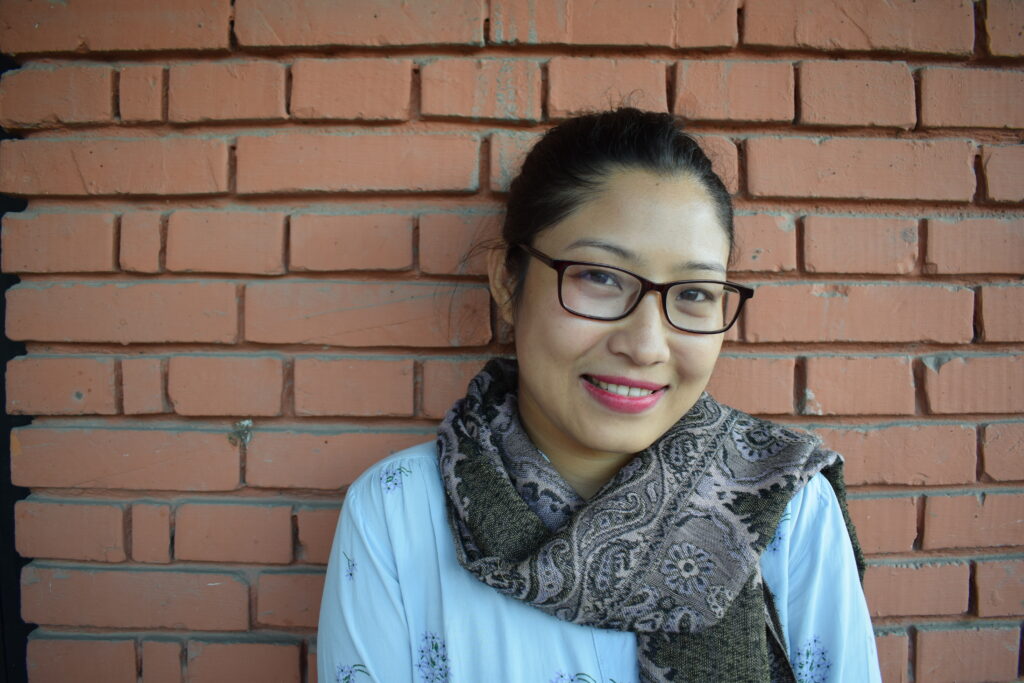
“I belong to the marginalized Yakthung community and the vice-president, Pabitra Sunar, is from the Dalit community. This is the first time that the organization is headed by an indigenous or Dalit person,” says Tumkhewa.
Text and picture: Saga Sinisalo